What is Cubic Zirconia?
and
The Properties of CZ

What is cubic zirconia? It is a crystallographic isometric form of zirconium oxide! It is also one of the most popular types of simulated diamonds of all times, used to create affordable earrings, necklaces and inexpensive wedding rings and engagement rings which look similar to jewelry pieces made with real diamonds.
To find out more about this fascinating diamond
simulant, including the history, synthesis and properties of cubic
zirconia, take a look at the info below.
Cubic Zirconia Fun Facts!
The chemical formula for Cubic Zirconia is ZrO2
Commercial Productions of CZ began in 1976.
A stabilizer must be used to create the crystalline structure of CZ.
CZ producers each have their own stabilizer recipe - so CZ quality can vary widely between producers.
And if you have any questions or comments about cz stones, send them in through the comment box at the end of the page!
|
The History of Cubic Zirconia Zirconium oxide occurs naturally in the extremely rare baddeleyite mineral, and was first discovered in 1882. Zirconium oxide might have amounted to nothing more than a footnote in a gemological library book detailing baddeleyite, but a discovery decades later would lead to the revolutionary creation of the cubic zirconia gemstone. It was in the 1930s that scientists discovered the naturally occurring cubic form of zirconia in microscopic quantities - and they realized the material may be useful in laser technologies. In the 1960s, work began to try to create the synthetic cubic form of zirconium oxide, but with a melting point well past 2,000 degrees Celsius the housing for the synthetic process kept melting. It was not until the 1970s when Russian scientists perfected the synthesis of cubic zirconia – and the rest, as they say, is history! In short time, people realized that cz was not only useful in laser technologies – but that it would also serve as a beautiful diamond simulant. Marketing this substitute diamond began shortly thereafter, and once Swarovski & Co. began selling cz gemstones in the 1980s the market for cubic zirconia loose stones and cubic zirconia jewelry exploded. So today, to answer what is cubic zirconia? It is a synthesized cubic form of the rare, but naturally occurring, zirconium oxide. What is Cubic Zirconia Synthesis? Cubic zirconia is essentially made with microwave technology in a contraption known as a skull crucible. A small amount of zirconium oxide ‘starter’ powder is placed in the crucible – and a tiny amount of calcium or yttrium is added as a stabilizer that forces the zirconium oxide to take on the molecular cubic structure needed to create a rough cubic zirconia stone. When heat is applied, the starter
powder begins to heat on the inside – leaving the outside cool so that
the crucible does not melt – the starter powder melts and then forms a
crystal structure as the mixture cools. The final product is a crystal
which may be cut into a gemstone of almost any shape – to create fancy
colored cz stones trace amounts of elemental oxides are added to the
starter powder, for example - cobalt oxide added to the starter will
produce lilac and violet cz gemstones.  Properties of Cubic Zirconia The properties of cubic zirconia include:
|
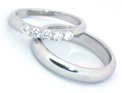
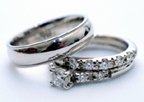
Silver CZ Wedding Ring Picks by Jeulia 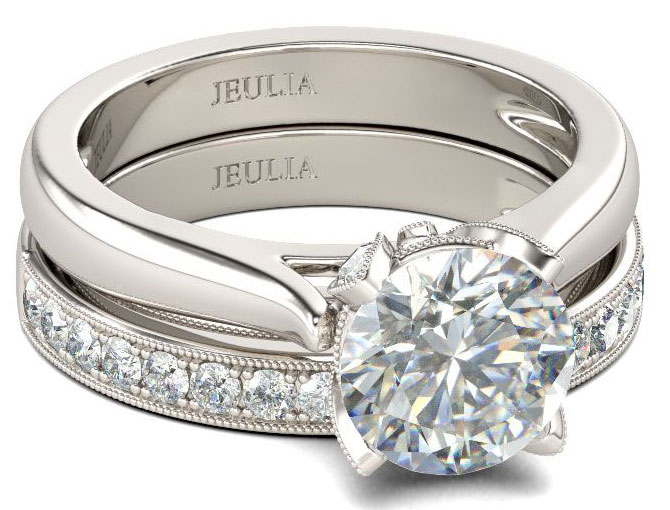 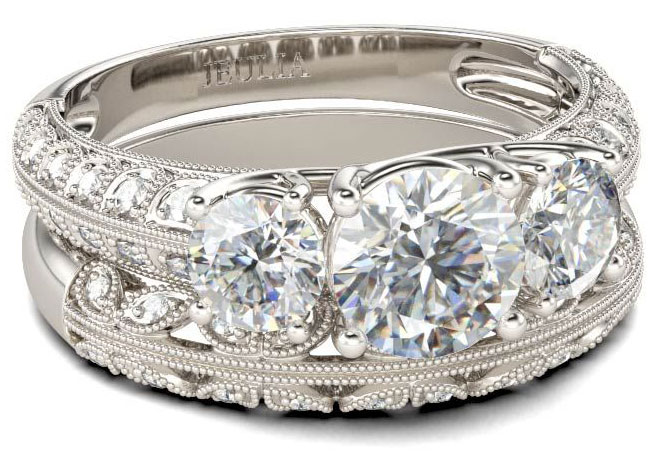 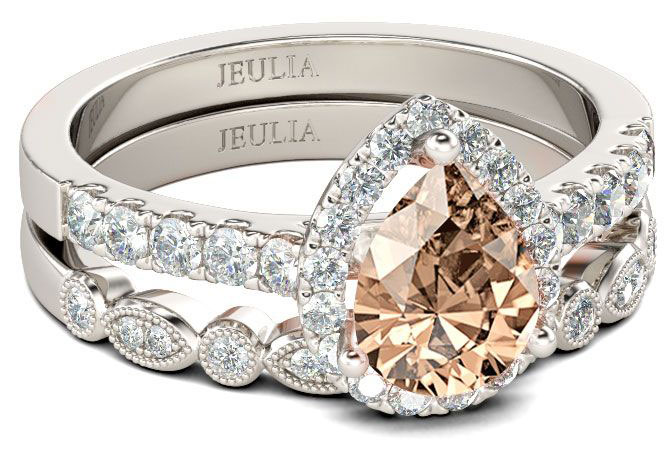 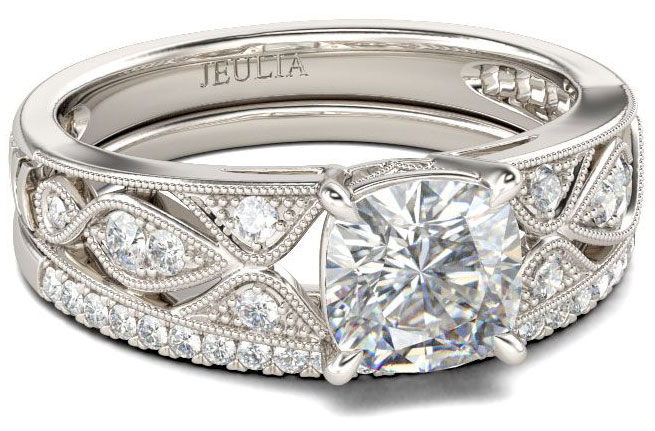 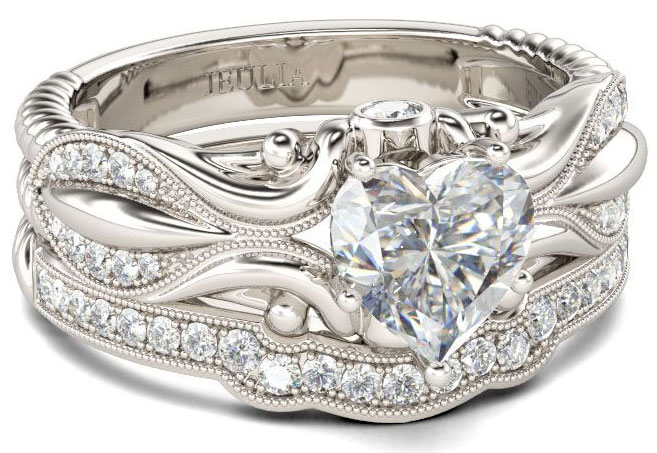 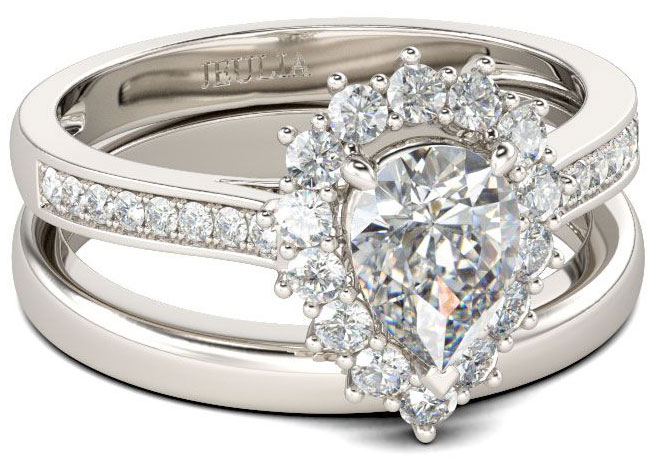 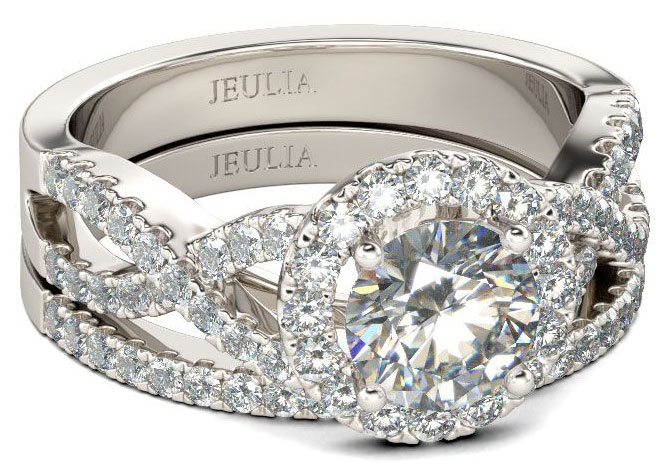 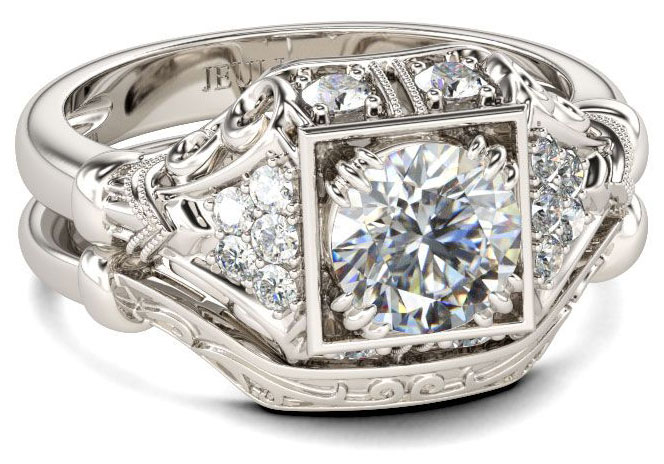 |
Depending on the purity of the starter powder and additives used to create the cz, these values can differ slightly. The exact properties of cubic zirconia loose stones - especially the flash and fire achieved - can also depend on how the gemstone is cut.
- Click on cubic zirconia vs diamond to see the specifics on how cubic zirconia compares to a real diamond.
Cubic zirconia also has a tendency to absorb oils - including natural oils from the skin, and oils present in lotions and hair care products. This is why cubic zirconia loose stones should be handled with clean, dry hands - and only when needed.
Now that you know the answer to What is Cubic Zirconia?, take a look at cubic zirconia wedding sets to see if cubic zirconia wedding bands and engagement rings are the right choice for your inexpensive wedding rings and to find essential cz wedding ring shopping tips including what types of rings to avoid.
Questions or Comments?
Do you have comments or questions about cubic zirconia simulants?
Send in your cubic zirconia questions and comments here! I will post answers to your questions as soon as possible.
Return from What is Cubic Zirconia to Man Made Diamonds
or
Return to Everything Wedding Rings Home
Interested in simulant or synthetic
Man-Made Diamonds?


Before buying Cubic Zirconia Wedding Sets....
Take a look at this page to find the best types of CZ rings!
Looking for Affordable Wedding Rings? Find gorgeous rings for the right price here!

Are Silver Wedding Bands right for you?

What is Moissanite, and how does it compare to a diamond?

Discover the Pros and Cons of
Stainless Steel Wedding Bands here!

Recommended & Trusted Jewelers
Our Advertisement Policy


Adin Fine Antique Jewelry
Use Code=Everything-Wedding-Rings
For a 5% Discount
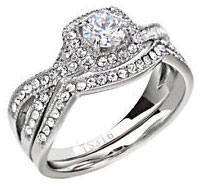
Everything-Wedding-Rings.com's Trusted & Highly Recommended Jewelers

Pages Our Visitors Love the Most



Copyright(C) 2009-2023 everything-wedding-rings.com. All rights reserved.