Colored Diamond Rings
and
Wedding Bands
Colored diamond rings display plenty of dazzling flash and fire, and
they are a fine choice for couples looking for unique engagement rings
and wedding bands.
If you are searching for a colorful ring crafted with
a stunning fancy color diamond, take a look below.
You'll find
facts about diamonds with colors, info about natural, color enhanced
diamonds and artificial colored diamonds, how fancy diamonds are graded
and valued, price guides plus essential shopping tips.
Fun Fast Facts About Colored Diamonds!
What element makes yellow diamonds yellow? Nitrogen
The rarest type of fancy diamonds? Red diamonds.
Clarity is still an important 'C' for fancy diamonds because low clarity diamonds can crack and break.
Violet diamonds are colored pink because of hydrogen.
And if you have any questions about fancy color diamond rings, use the handy comment box at the end of the page to send in your questions!
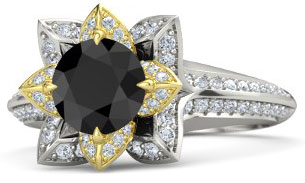
See the Black Diamond Engagement Ring Collection at Gemvara!
Discover A Rainbow of Natural Fancy Diamonds
at Blue Nile
Find Fancy Yellow, Pink and Blue Lab Created Diamonds at Brilliant Earth!
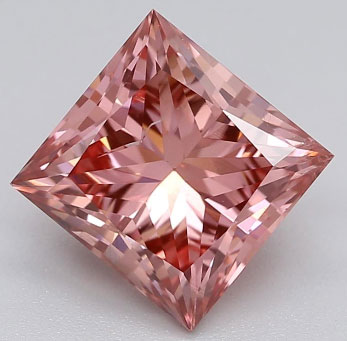
About Diamond Colors
Diamond
colors range from the more abundant gray, chocolate brown, champagne and yellow fancies to the rare pink, blue,
orange, purple and violet color diamonds.
Natural red and green diamonds are the rarest of all fancy colored diamonds, followed by blue and purple diamonds.
Looking for Yellow Diamond Engagement Rings?
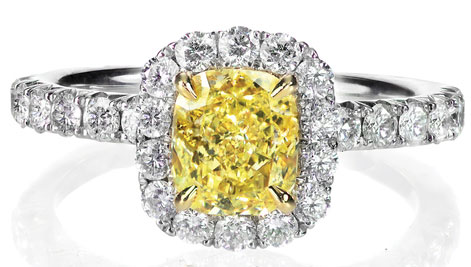
See the grading parameters for yellow diamonds, how they are valued and where you can find the best yellow fancies for yellow diamond engagement rings.
Discover romantic Pink Diamond Engagement Rings!
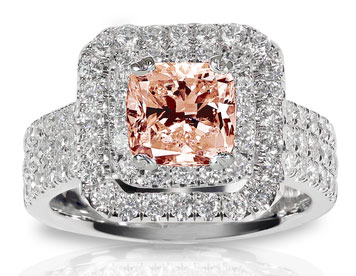
Rare and romantic, pink diamonds are a true treasure. Find out how these fancies are graded and priced plus where to find natural, enhanced and man-made
pink diamond rings.
Are rings with Black Diamonds
the right style for you?
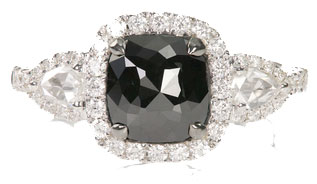
Unique, dark and delicious black diamonds have plenty of flash and fire. See where black diamonds come from and view our fine selection of top black diamond engagement rings too.
See the beauty of Blue Diamond Engagement Rings here!
Some of the rarest fancy color diamonds are the coveted blue diamonds, here you will find how these diamonds are valued and assessed plus where to find natural blue fancy diamonds for wedding and engagement rings.
White diamonds also form in
nature, and unlike colorless diamonds (which are sometimes called "white
diamonds" too), these diamonds have a milky white appearance. While not
rare, true white diamonds are not very common either.
What about black diamonds? Real black diamonds are known as carbonados, and these diamonds are quite rare - they also have a different molecular structure than other types of diamonds. Because carbonados are so rare, and can have fissures in the stones which decrease their durability, most black diamonds sold today are created by heat treating or irradiating natural colorless diamonds.
What causes colors to occur in natural diamonds? Colors occur in diamonds when trace elements react with the carbon atoms as the diamonds are formed; extreme natural pressure may also cause colors to appear in diamonds.
Yellow to orange colors in diamonds
are produced when
nitrogen is present while the diamond is being formed. Blue in diamonds
is caused by the presence of boron, violet occurs with the presence of
hydrogen,
green colors appear when diamonds are exposed to natural radiation, and
extreme levels of high pressure contributes to the variety of pinks,
reds, browns and purples in some fancy color diamonds.
Grading and Authenticating Colored Diamonds
The Gemological Institute of
America (GIA) and the International Gemological Institute (IGI) both issue two certificates for fancy colored diamonds.
The first certificate is a report on the diamond's clarity, symmetry, polish, and cut (in addition to mapping the diamond and identifying unique characteristics and carat weight), and the second report is a color only certificate.
Because it can be impossible to tell the difference between a synthetic colored diamond, enhanced colored diamond and a natural colored diamond, it is best to stick with retailers who offer GIA or IGI certified colored diamond rings. Synthetic colored diamonds created through the HPHT process should come with a GIA or IGI certificate too.
The Gemological Institute of America (GIA) grades diamonds of color on the following diamond color grade scale:

The color only certificate grades the diamond on the hue of the
color, the tone of the color, and the saturation of the color.
- The hue
of the color identifies the main color of the stone.
- The tone of the
color is how light or dark the diamond appears.
- The saturation of the color is a measurement of the intensity of the color.
A
certificate for a diamond of color also indicates whether the color is
natural or treated (if the diamond is treated the type of treatment is
also listed). In some cases it can be difficult to tell if color diamonds
have been treated, and in this instance they are labeled 'undetermined.'
Additional specialized tests may be the only way to confirm the origins
of an undetermined diamond's color.
Color Enhanced Diamonds: Natural and Artificial
Rings crafted with color diamonds may either contain real fancy diamonds or artificial colored diamonds which were produced in a laboratory.
The color in natural diamonds may be enhanced to improve the consistency of the hue, darken the existing color or change the color.
Enhanced loose colored diamonds are created by heating or irradiating real colorless diamonds or by exposing real colorless diamonds to high pressure and high temperature (a process known as HPHT). Colored diamonds which have been enhanced through these methods will never fade and are completely safe to wear.
Enhanced natural colored diamonds are also much less expensive than un-enhanced fancy color diamonds.
Another method of creating a color enhanced diamond is to apply a color coating over the surface of the diamond - but the coating will eventually wear away. These types of diamonds are not recommended for rings, particularly for every day wear colored diamond engagement rings and wedding bands.
Synthetic color diamonds - which have the exact same physical properties of natural color diamonds - are also formed by the HPHT process.
Artificial
colored diamonds - also known as simulant colored diamonds - look a lot
like real colored diamonds but do not have the same physical properties
as diamonds. An example of a simulant colored diamond is colored cubic zirconia.
Colored Diamond Rings Price Guide
Most rings made with natural un-enhanced fancy color diamonds are priced much higher than comparable rings made with colorless diamonds, especially if rings hold the rare pink, red, blue, violet or green diamonds.
The value of a color diamond increases according to the purity of the color. For example, a diamond that is a dark pure orange is much more expensive than a diamond that has hints of orange and some tones of yellow or brown.
The cut, clarity, symmetry and polish of the diamond also affect the diamond's value and the total overall price of the ring. Real color diamonds also increase dramatically in price with carat size.
Color enhanced diamonds are much more
affordable than authentic color diamonds. For example, a small un-enhanced real pink
diamond can cost more than $100,000 dollars, whereas an enhanced pink
diamond may be priced as low as $2,000 dollars. Couples searching for colored diamond engagement rings and wedding bands for an affordable price may want to select enhanced colored diamond wedding rings.
Just
like colorless diamonds, color diamonds can be cut into various types
of shapes. An excellent cut, such as the round brilliant cut, which
maximizes brilliance and fire will increase the value of the diamond and the ring.
How do you know if you are paying the right price for a color diamond? Comparison shopping! Look for colored diamond rings with similar diamonds - made with comparable metals and workmanship - so you can gain a ballpark figure of accurate prices.
Popular Styles of Colored Diamond Rings
Eye-catching
canary yellow colored diamond engagement rings are definitely at the top
of the popularity list for all colored diamond rings. Romantic pink is
also a favorite
color followed by blue and orange diamond rings. Champagne and chocolate
diamonds too are often preferred in men's color diamond wedding bands.
Most diamond rings made with colored diamonds are crafted with white metals - platinum, palladium or white gold. This is because the white of the metals enhance the colors of the diamonds. Set in rose gold or yellow gold, the color of the diamonds can look a bit subdued from the rose or yellow reflection of the gold.
Popular settings
for loose colored diamonds include halo settings made with colorless
diamond frames plus raised settings, like the cathedral setting, which
lift the diamonds up to enhance their natural brilliance and fire.
Colored Diamond Rings Shopping Guide
The number one thing to remember when shopping for authentic colored diamond rings is to stick with rings that come with a GIA or IGI certificate.
Unfortunately, there has been a huge influx of stones sold as real color diamonds which are in fact poor quality colorless diamonds with a color coating, colored cubic zirconia and even colored cut glass. Protect your investment with GIA or IGI certified colored diamonds!
- Synthetic color diamonds should come with a GIA or IGI certificate too.
Color consistency in natural, and enhanced, color diamonds is important. The color should be the same across the entire diamond - flashes and hues of secondary colors (except for the natural white flash of light reflection which occurs in real colorless and color diamonds) are highly undesirable and will affect the value of the diamonds. For example, secondary yellow color flashes in a blue diamond would be an undesirable characteristic.
To maximize the flash and fire of a color diamonds, rings made with platinum, palladium and white metal are best. If you want colored diamond rings with plenty of flash and fire, cuts that have the highest level of sparkle include the round brilliant, Asscher, princess and radiant cuts.
Color enhanced diamonds - which have been enhanced through irradiation and heat or HPHT treatment - do not require any special care. However, simulant color diamonds will require special care, but how much depends on the stone. If you do go with a color simulant, be sure to follow the care instructions for the ring.
Questions or Comments?
Questions or comments about colored diamond rings?
Send in your questions and comments, or share pics of your gorgeous colored diamond ring here!
I will post answers to your questions as soon as possible!
Return from Colored Diamond Rings to Diamond Wedding Rings
or
Interested in simulant or synthetic
Man-Made Diamonds?
See the different Types of Diamond Cuts here!
Say NO to Conflict Diamonds. Use this info to make sure your diamonds are conflict-free!
Find the most trusted Diamond Certification laboratories here!

Discover all the parts of a diamond with this Anatomy of a Diamond page!
See Why Platinum Is A Top Metal For Luxury Wedding Rings
Recommended & Trusted Jewelers
Our Advertisement Policy


Adin Fine Antique Jewelry
Use Code=Everything-Wedding-Rings
For a 5% Discount
Everything-Wedding-Rings.com's Trusted & Highly Recommended Jewelers

Pages Our Visitors Love the Most


Copyright(C) 2009-2023 everything-wedding-rings.com. All rights reserved.
New! Comments
Share your comments below!